- DON'T POST ANY PORN, YOU WILL BE BANNED.
- Please use a "*" or "nm" in the subject line to denote topic only posts.
- Any post or attempt to take things "off the board" will result in a ban. Do not use other poster's real names or personal info.
- Don't be a jerk.
- Please learn how to copy the URL of pictures and use the image embedding field to post pictures of celebrities.
Admin Email - ( thevictorsboard at gmail dot com).
To Register - Email your desired handle and password to victardgoblue at gmail.com
Moderators - Ed, Rich, bh, DetroitBry, BBA
Ceremonial Moderator - wino
Honorary Moderators - BigLake, Blue Man
POTY - Craig
The Victors
Scores Only || MGoBlog || Board #5 || UMHoops || Lods' Card Site || gbmcq@Rivals || Nikos chatroom
Posted on June 14, 2026 at 07:15:32 AM by rkm
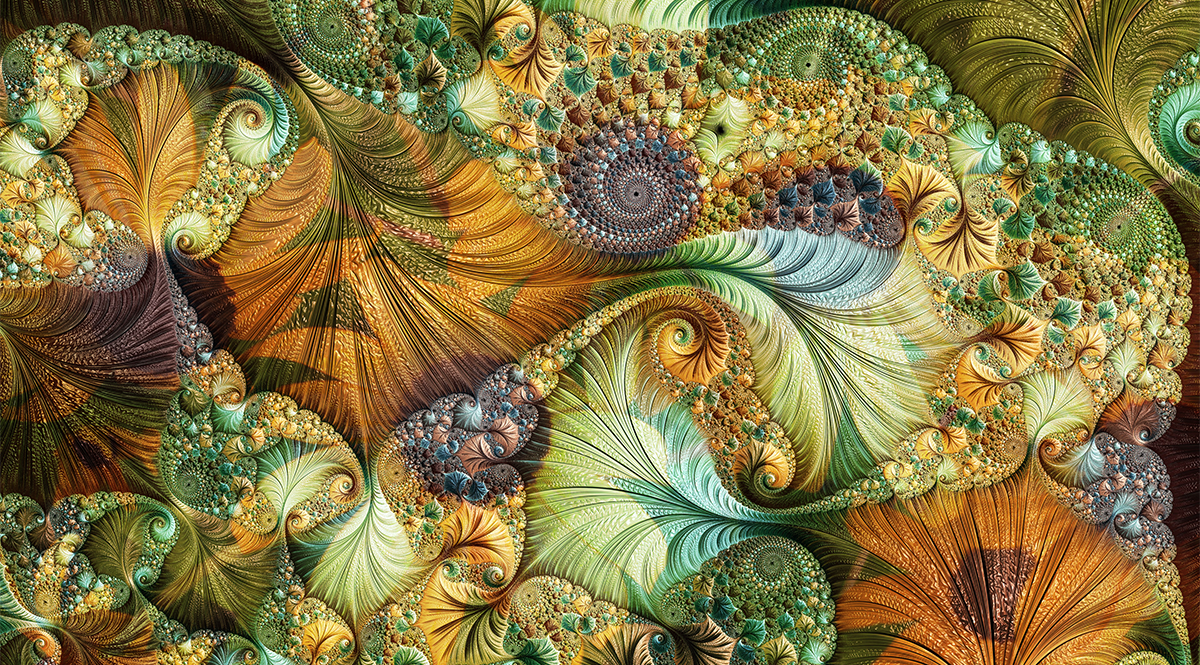
Turning the Psychedelic Experience into a Math Problem
Extended DMT trips could help scientists probe a new theory of reality that puts consciousness first
One psychedelic stands out from all the others: DMT. When the high priest of psychedelics Terence McKenna first took DMT in the 1960s, he noted that his understanding of the nature of the world was “shredded in front of me.” He met “machine-elf” creatures who spoke a strange colored language and were in a constant state of transformation in a world made of alien geometries and materials. Everything was so “unEnglishable,” as he put it, that he was in complete shock. He never got over it.
While LSD and psilocybin typically distort or enhance a person’s experience of their current environment, DMT seems to shake the very foundations of reality. Those who take it report feeling as though they’ve been transported to alternate dimensions populated by alien beings with whom they can interact. These trips are also notoriously short, lasting minutes rather than hours.
Recently, a pair of scientists decided to use DMT to study the mathematical architecture of human experience—and their theory of reality, “conscious realism,” which proposes that consciousness is the most fundamental property of the universe, and that physical reality is just an interface. The two collaborators—Andrew Gallimore, a neurobiologist and psychedelics researcher who leads consciousness research nonprofit Noonautics, and Donald Hoffman, a cognitive scientist who founded the Trace Institute to help develop the new framework—plan to send trained scientists and psychedelic experts into the “DMT space.” They detailed their proposal in a new preprint.
Hoffman says he’s been grappling with questions about the nature of consciousness since he was a kid, trying to make sense of the conflicts between his fundamentalist Christian upbringing and his science classes in school. He was driven by the question: “Are we just machines?” and ended up working in artificial intelligence at MIT for many decades before founding the Trace Institute. Gallimore first discovered psychedelics as a teenager. He has been wanting to get to the bottom of the mystery of DMT ever since.
I spoke with them about the hard problem of consciousness, panpsychism, machine-elves, Buddhist ideas of enlightenment, and how conscious realism intersects with new findings in theoretical physics about space-time.
Your theory of “conscious realism” flips the hard problem of consciousness on its head, so to speak. Rather than trying to explain how consciousness arises from the physical matter of the brain, your theory suggests we need to explain how the physical world as we know it arises from the interaction of conscious agents. Is this question an easier one to answer?
Donald Hoffman: The hard problem is how do we start with the physical world and get specific conscious experiences like the taste of mint or the sound of middle C. I’m good friends with all the big players in the field, and they’re brilliant, and they’re doing great research. The problem is there are trillions of experiences that humans have, and not one has ever been explained by a physicalist or functionalist theory. There’s zero success on specific conscious experiences.
If I came out and said, “Hey, I’ve got a theory about particle physics, but it can’t explain any specific particle interactions,” physicists would say, “Come back when you’ve got something.” And that’s my attitude about this.
It’s not because they’re not smart enough. These people are brilliant. But they’re giving us a theory of consciousness that can’t explain a single experience. Eventually, science will realize you cannot boot up conscious experiences from unconscious ingredients. We will just realize that’s not possible. Compared to that, what we’re trying to do is pretty simple. We’re saying let’s start with conscious experiences. That’s our fundamental thing. And if we have conscious experiences, then we’d need to show how we can get what we call the physical world as a special kind of headset through which different consciousnesses are interacting. That’s what we’re working on right now. It’s an eminently feasible problem, and we’ll probably have publishable answers within a year or two.
How would your theory of conscious realism alter other basic assumptions about how reality works?
Hoffman: One of the big assumptions in science right now is that spacetime is fundamental. Conscious realism is saying that’s not true. But I should add, we’re not the first to say that. The high energy theoretical physicists who are studying quantum gravity are saying that very clearly right now, too. Efforts to try to get a theory of quantum gravity make it very clear that spacetime isn’t fundamental. The European Research Council already has a €10-million initiative for studies of particle physics entirely outside of spacetime. They’re finding what they call positive geometries entirely outside of spacetime and entirely beyond quantum theory.
All of this means the hard problem actually cannot be solved, because the hard problem assumes that spacetime is fundamental and that particles inside spacetime are going to somehow, with the right complexity in functional properties, give rise to conscious experiences. But the promise that spacetime is fundamental is false. So the hard problem is doomed. It’s just that my colleagues in neuroscience don’t understand that yet.
You write that game theory has shown evolution favors perceptual systems tuned to fitness payoffs rather than objective truths, as one line of evidence for your theory. Can you offer a simple straightforward example of this?
Hoffman: A fun example is the jewel beetle that lives in the outback of Western Australia. They’re dimpled, glossy, and brown. The females are flightless. The males fly around looking for females, and when they find an eligible female, they will alight to mate. But in the outback of Australia, there are guys who drink beer with these bottles that are dimpled, glossy, and brown, just the right shade of brown, who grab the attention of the male jewel beetles. The males flock all over these bottles trying to make full body contact, and they cannot figure out that it’s not a real female.
Now, this is a species that’s successfully mated for millions of years. And yet the male has no idea what a real female is. They just had a simple hack. A female is something dimpled, glossy, and brown. The bigger the better. A little thing like a beer bottle could actually destroy an entire species. So that’s how much deep insight evolution has wired into our perceptual systems.
You plan to test your conscious realism theory using extended DMT trips. Why DMT?
Andrew Gallimore: All psychedelics work by perturbing the brain and changing the structure and the dynamics of your experienced world. That’s broadly what a psychedelic is. But DMT seems to go further than that. It obliterates our normal waking model of the world and replaces it with one that has no relationship whatsoever to the normal waking world. It replaces it with a world that’s inordinately complex, often topologically and geometrically unrelated to normal spacetime geometry. And most notably, it’s abundantly populated by what appear to be non-human, non-animal beings that have no reference in the normal waking environment.
We’ve known that about DMT since the 1950s, and these effects have always been explained as hallucinations: “This is just the brain on drugs, man.” But I’ve been studying DMT now for over 20 years, and in my opinion, it’s very difficult to explain how and why when you perturb the brain with this simple molecule, it should suddenly stop constructing the normal waking model of reality, the model of the world that the brain evolved to construct. When you perturb the brain with this molecule, it suddenly becomes capable of constructing these entirely alien worlds that have no relationship to the waking world. That’s a problem in my opinion.
It’s like a 5-year-old child suddenly switching from speaking English to some obscure dialect of some South African click language, but fluently. It would be confounding if a child did that. And yet when the brain starts constructing, reliably and efficiently, with crystalline clarity, these alien worlds, we say, “Oh, it’s just hallucination.” I don’t think it’s that simple. I could only explain DMT if somehow the brain was gaining access to some alternate source of sensory inputs. But that didn’t make any sense from a physicalist perspective. Where does that information come from? How is it possible that the brain can be receiving information from some other dimension, from some other world? It didn’t make sense until we started looking at it through the lens of conscious realism.
You think about the brain occupying this region of what conscious realism refers to as “the experience space.” We occupy this as a conscious agent. We occupy this very small region of a vast experience space, which is what we call consensus reality. That’s how we experience the world. And on top of the experience base, you have a qualia kernel, a set of rules or dynamics that determines how you move from one experience to the next.
If you perturb the conscious agent sufficiently, which is what DMT clearly does, then all of these dynamical rules that were determined by the qualia kernel no longer apply. You can enter into extremely exotic and unusual dynamical regimes. The quality kernel also determines how you interact with a network of conscious agents, including which ones have an effect on your experience and which ones you perceive—that’s all determined. That’s embedded; it’s implicit. So when you’re pushed into this other region of the experience space with different dynamics, you begin interacting with the conscious agent network in entirely different ways, becoming sensitive to conscious agents that before were completely imperceptible, that evolution had said, “These aren’t important, these aren’t adaptive.” Suddenly you’re in this region where you start interacting with conscious agents that you normally can’t interact with. You start perceiving conscious agents you couldn’t normally perceive.
If you ask, “What would it actually be like to get pushed into this region of the experience base?,” you find that the whole of DMT phenomenology basically falls out of mathematics. The geometry and the topology would be extremely strange, unusual, and impossible. The world would seem entirely alien, completely non-human, completely non-animal, completely unlike anything else you’d ever experienced. And that, of course, is what DMT does. This remarkable thing happened when we started digging into the theory, and I started probing Don’s beautiful model. DMT started making perfect sense.
Why would ignorance of certain conscious agents support fitness?
Gallimore: What’s implicit within Don’s theory is that there’s effectively a boundless number of different conscious agents that we simply can’t imagine. But evolution has tuned us to that small slice of the conscious agent network that’s adaptive.
In that case, why would there be this one little molecule that can open it all up and allow us to see a wider perspective?
Gallimore: DMT doesn’t have to be unique. What you need is a molecule that’s gonna give the brain a particularly robust perturbation to knock it out of the experience base. We don’t know whether something deeper and more interesting is going on. We wouldn’t necessarily think that DMT is there by design or anything like that, and of course, there are other psychedelics as well. If you push them hard enough, if you take a high dose of psilocybin mushrooms, you’ll enter very similar states. You will enter these extremely exotic dynamical states, unusual geometric and topological worlds that are occupied by other beings. DMT just happens to be the most efficient way to do it.
You say humans can almost never get outside of our own “interface,” aside from during these psychedelic experiences. But does your theory suggest that there are any other instances where everyday experience breaks down, like near-death experiences (NDE)?
https://nautil.us/turning-the-psychedelic-experience-into-a-math-problem
Replies:
- Fascinating read. Saved the link for further reading. Thanks* - By Egghead June 14, 2026 at 11:44:30 AM
- Really interesting - By ny1995v2 June 14, 2026 at 09:19:35 AM
- * - By Egghead June 14, 2026 at 11:53:33 AM
- conclusion - By rkm June 14, 2026 at 07:16:15 AM
- Thanks again!* - By Egghead June 14, 2026 at 11:58:30 AM
You must register before you can post on this board. You can register here.
Post a reply:
"We use cookies and other data collection technologies to provide the best experience for our customers. You may request that your data not be shared with third parties here: "Do Not Sell My Data